
It sinks
Base too shallow, or compacted as one deep layer so the bottom stayed loose.
Prevented by: 300 mm of Granular A placed in 75–100 mm lifts, compacted between each.
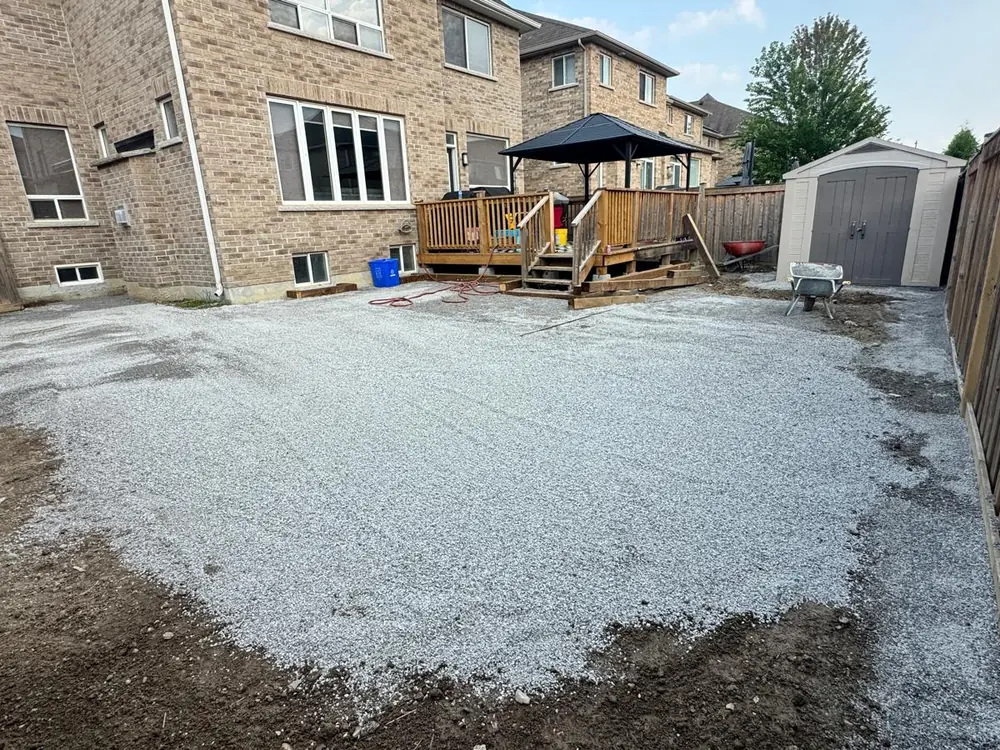
Every sunken driveway in Ontario has the same cause: not enough base, or base that was never properly compacted. Pavers don't sink — the ground under them does. This is the section FOUR40 builds to, published in full, so you can hold any quote against it.
The section
Walkways and patios use the same method at 150 mm of base rather than 300. Everything else is identical.
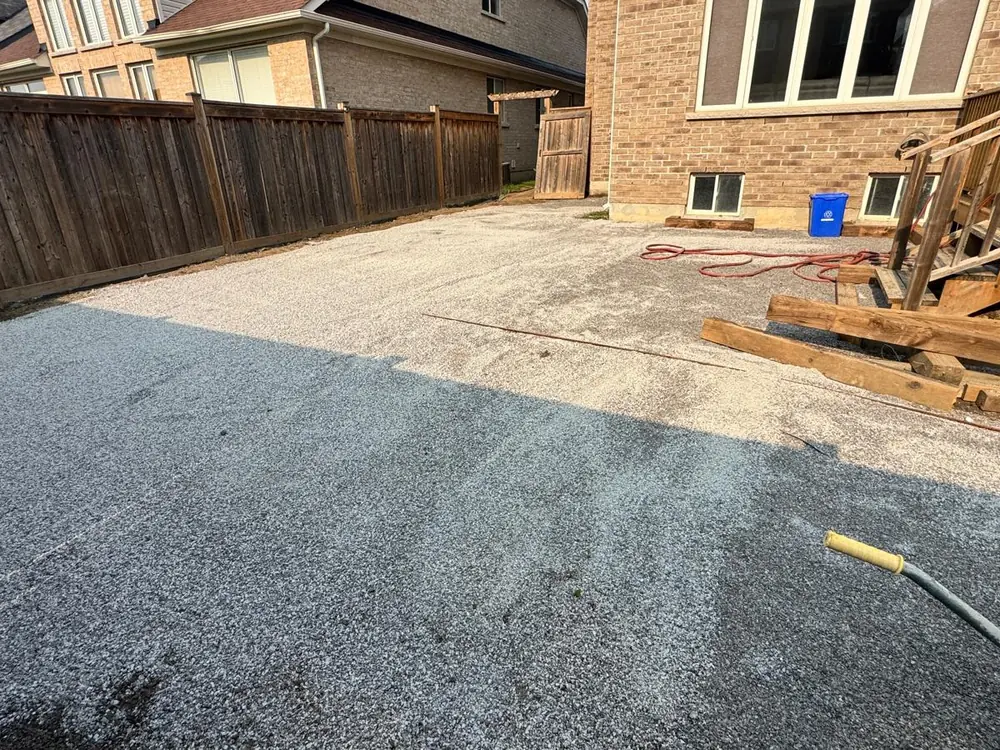
Ask any quote you're comparing one question: how deep is the base, and how many lifts is it compacted in? If the answer is vague, or the number is under eight inches for a driveway, you now know what you're buying.
Why it matters
Base too shallow, or compacted as one deep layer so the bottom stayed loose.
Prevented by: 300 mm of Granular A placed in 75–100 mm lifts, compacted between each.
Water trapped under the surface freezes and lifts it, then leaves a void behind when it thaws.
Prevented by: free-draining base, 2% minimum slope, and drainage corrected before paving.
A thick sand bedding layer, or 60 mm pavers under vehicle load.
Prevented by: 25 mm screeded HPB and 80 mm driveway-grade units.
Without restraint, the outermost pavers creep outward and the joints open up across the whole field.
Prevented by: edge restraint spiked at 250–300 mm and polymeric sand set into the joints.
Over years, clean stone migrates down into clay and clay migrates up. Depth is lost invisibly.
Prevented by: non-woven geotextile between subgrade and base.
Digging without utility locates is the fastest way to turn a driveway job into a serious incident.
Prevented by: Ontario One Call booked on every excavation. Free, and legally required.
The stages
Nobody photographs the middle of a hardscape job, which is exactly why it is worth showing. These are our own sites, at the stages that decide whether the surface is still flat in five years.
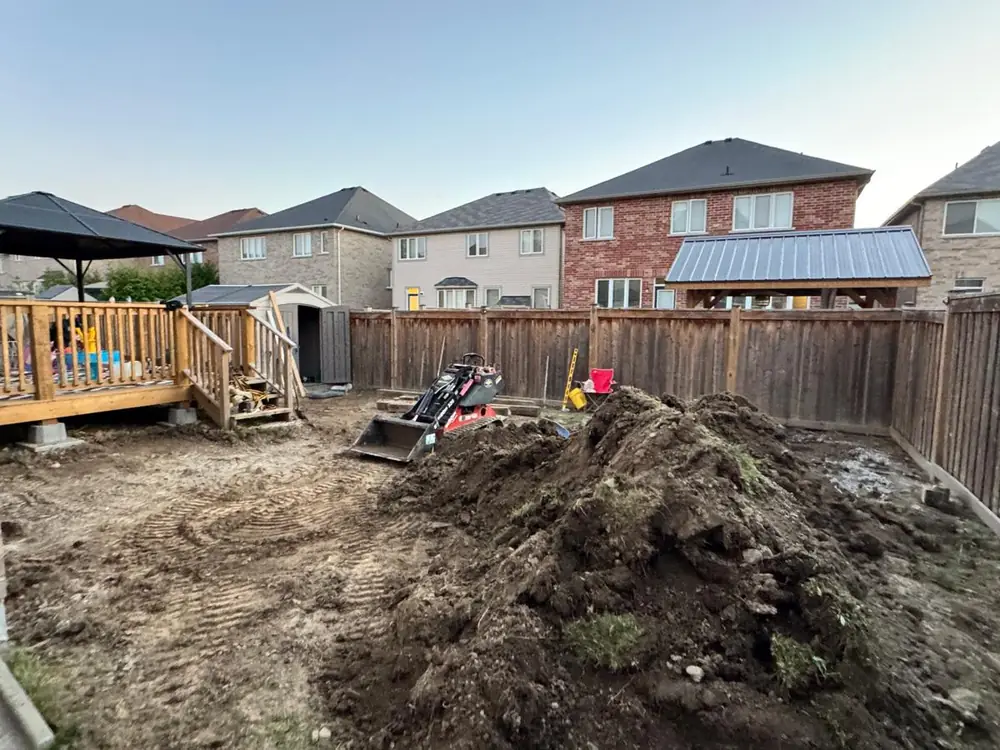 BeforeAfter
Drag the handle — or use the arrow keys
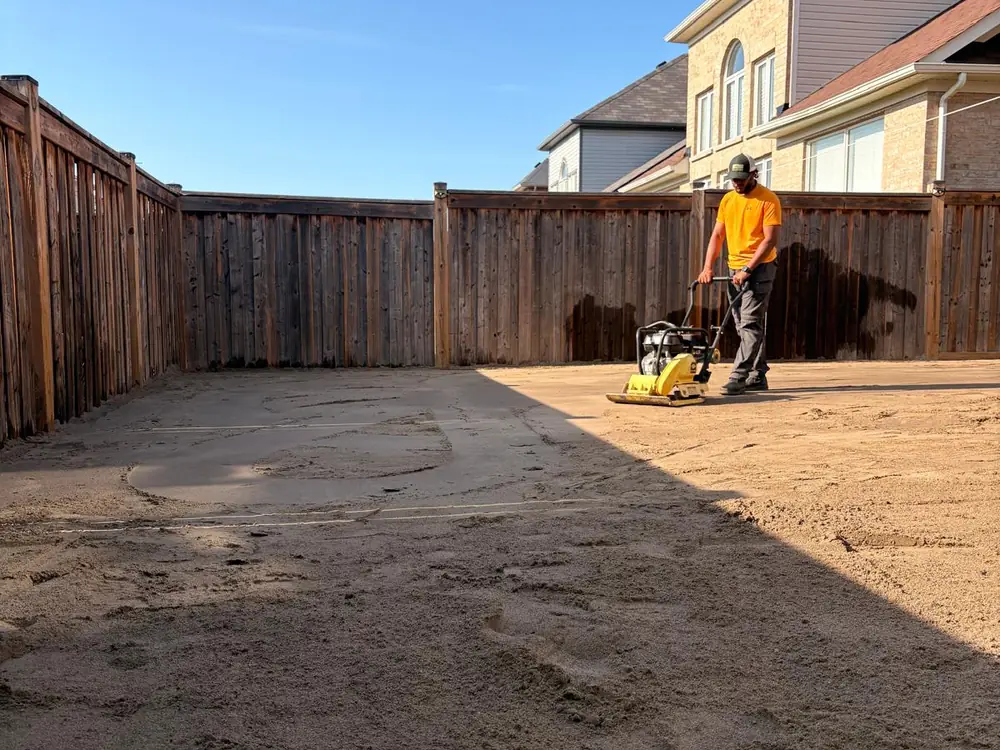
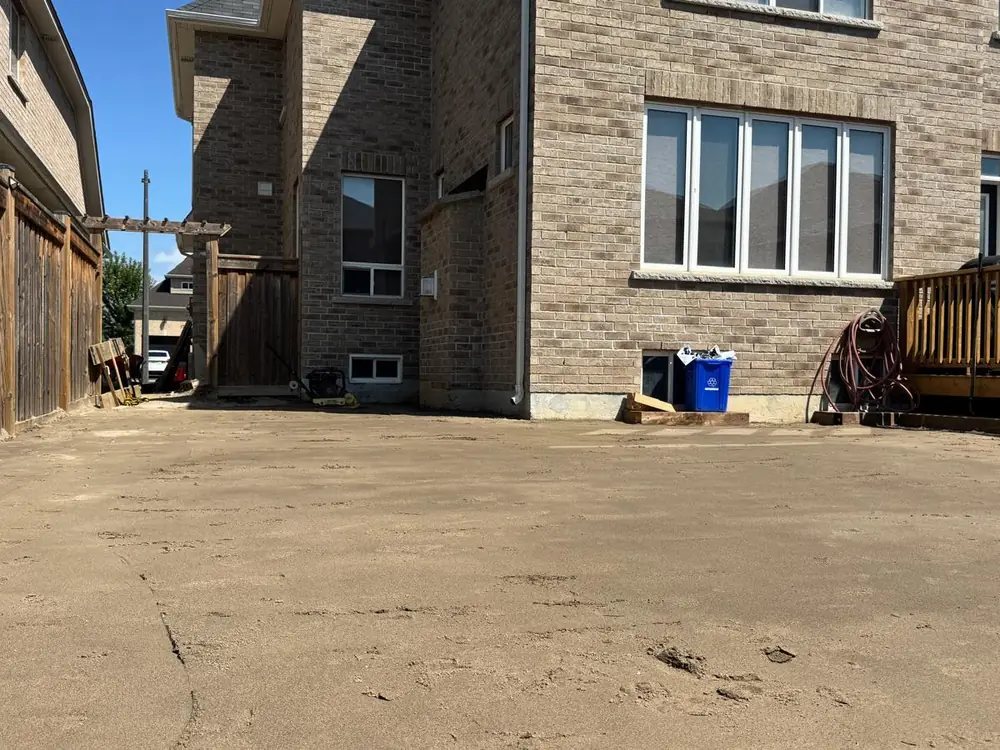
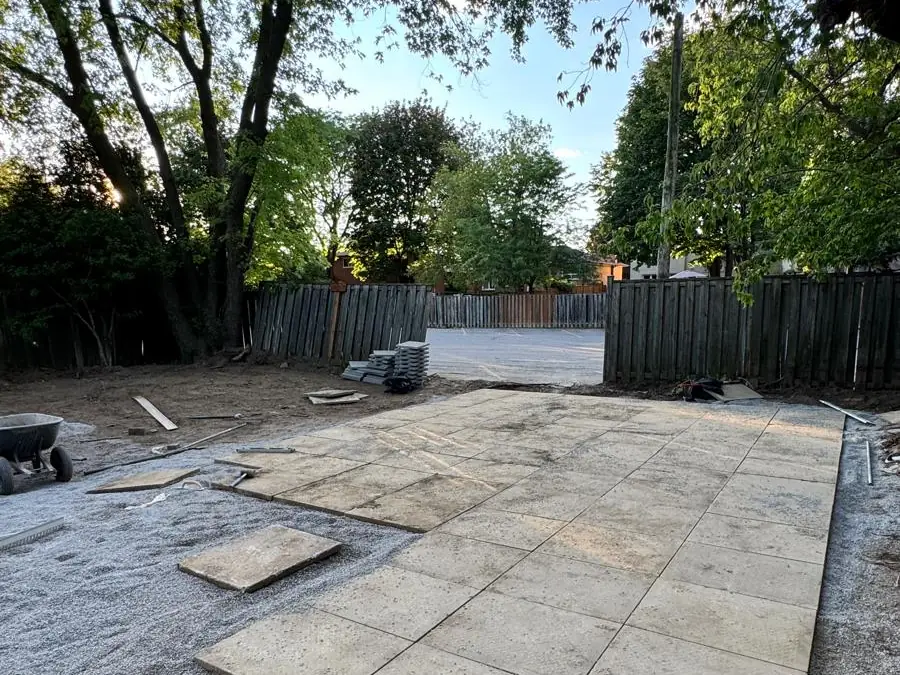
Two of these sequences stop before the finished surface — those jobs were photographed to the base and no further. We are rebuilding the photo set as jobs run rather than filling the gap with someone else's work.
Working with us
We measure, check drainage and grade, and talk through what you actually want. Free, and no pressure to sign anything.
Scope, materials, base depth and price in writing. You'll know exactly what's included before a shovel moves.
Ontario One Call locates booked, materials ordered, start date confirmed. A realistic window, not an optimistic one.
Excavation, base, compaction, install. Site cleaned at the end of each day — you still have to live there.
We walk it together before final payment. Anything on your list gets fixed, then we're back if settling shows up.
Questions
Freeze-thaw. Water held in or under the base expands when it freezes and lifts whatever sits on top of it. A deep, properly compacted, well-drained granular base gives that water somewhere to go and gives the surface a stable platform that doesn't move with the seasons.
Granular A is a specified aggregate with a graded mix of particle sizes, so the small particles lock the large ones together under compaction. Sand and stone dust don't interlock the same way — they shift under load. A thick sand bed under pavers is one of the most common causes of rutting.
Instead of dumping the full base depth and running a compactor over the top, the material goes down in 75–100 mm layers and each layer is compacted before the next one is placed. A plate compactor only influences the top few inches. Skipping lifts gives you a hard crust over loose gravel — it passes a walk-over inspection and fails in year three.
It separates the clean granular base from the soil beneath. Without it, over years of loading, the base slowly works its way into the subgrade and the subgrade works its way up. You lose effective base depth without anything visible happening at the surface. It costs very little on install day and cannot be added afterwards.
Roughly a quarter-inch per foot, falling away from the house. It's the minimum that reliably moves surface water off the paving and away from your foundation. Flat looks fine on the day and ponds for the next twenty years.
Four questions. How deep is the base and in how many lifts is it compacted? Is there geotextile between base and subgrade? What thickness are the pavers — 60 mm or 80 mm? And what's the slope away from the house? Vague answers to any of those tell you what you're actually buying.
Related
Free estimate
Fill this in and we'll get back to you to book a site visit — usually the same day.
Or call directly(647) 473-3454