FOUR40 Homes and Contracting (647) 473-3454
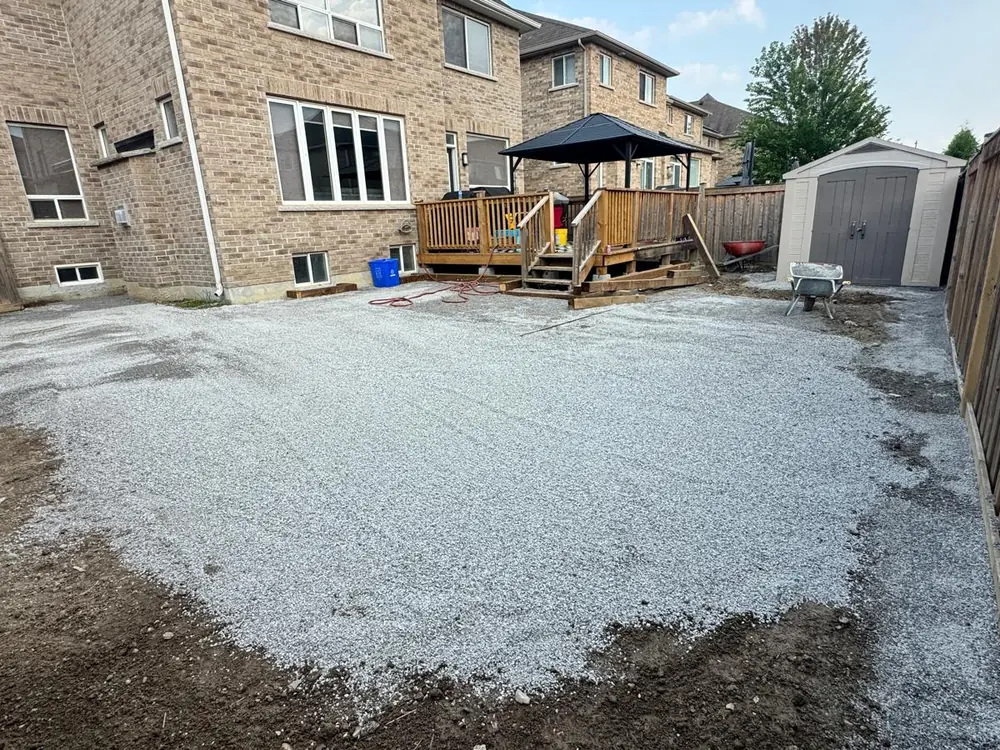
Granular base spread and compacted flat across a backyard

When to seal interlocking, and whether to bother.

Sealing is optional, and the honest version of this advice includes when not to do it. Here is what it does, what it does not, and when it is worth the commitment.

Based in
Whitchurch-Stouffville
Estimates
Free & on-site
Before we start
Written scope
On site
Same crew throughout

What it does

And what it doesn't.

It does

  • Deepen and enrich colour
  • Make cleaning easier
  • Resist oil and stains
  • Help hold joint sand
  • Slow surface salt damage

It doesn't

  • Fix a settling driveway
  • Stop heaving
  • Replace re-sanding
  • Prevent weeds by itself

It is a surface treatment, not a structural one.

The commitment

  • Needs redoing periodically
  • Goes patchy if left too long
  • Surface must be clean and dry before application
  • Re-sand before sealing, always

Start only if you intend to keep it up.

Timing

When to do it, and when not to.

Wait if

  • The surface is less than a season old
  • Efflorescence is still working out
  • The joints need re-sanding first
  • Rain is forecast within the cure window

Good time

  • Dry spell, moderate temperatures
  • After cleaning and re-sanding
  • Late spring or early autumn
  • Before winter rather than after

Do this first

  • Clean thoroughly
  • Re-sand the joints
  • Fix any settled areas
  • Replace failed edge restraint

Sealing over problems seals in problems.

Questions

Questions, answered.

Should I seal at all?

It is genuinely optional. Sealing deepens colour, makes cleaning easier, helps against staining and slows salt damage at the surface. It also has to be redone periodically or it goes patchy, and it does nothing for a driveway whose problem is the base.

How soon after installation?

Not immediately. New pavers need time to weather and for efflorescence to work its way out — usually at least one season, sometimes longer. Sealing too early traps it.

Wet look or natural?

Wet-look enhances colour considerably and is a strong aesthetic commitment. Natural-finish sealers protect without changing appearance much. If you are unsure, natural is the safer first choice — you can always go glossier later.

Does sealing stop weeds?

Polymeric sand does most of that work. Sealing on top helps hold the sand and slows regrowth, but weeds mostly germinate from seed landing on the surface rather than growing up through.

Free estimate

Tell us about the project.

Fill this in and we'll get back to you to book a site visit — usually the same day.

Or call directly(647) 473-3454

Step 1 of 3 — what do you need?

Step 2 of 3 — the project

Got photos? Text them to (647) 473-3454 after you send this. A photo of the driveway or room lets us quote far more accurately, and often faster.

Step 3 of 3 — where to reach you

Turnstile spam protection is wired up and switches on as soon as the site key is added — see the handover notes.

We only use your details to quote this project. No lists, no sharing. See our privacy policy.

Call now Free quote